

In civilian life, we are used to a first aid kit being about band-aids, painkillers, and antiseptics. But in the reality of war, where danger can strike any city at any moment, these items will not save a life.
Today, the standard for survival is the IFAK (Individual First Aid Kit), assembled according to the NATO TCCC protocol. However, remember the golden rule of tactical medicine: a kit without skills is just an expensive accessory.
At HTEC “MIST”, we teach you not just to “own” a kit, but to use it effectively. Let’s break down what should be in your pouch according to the MARCH algorithm.
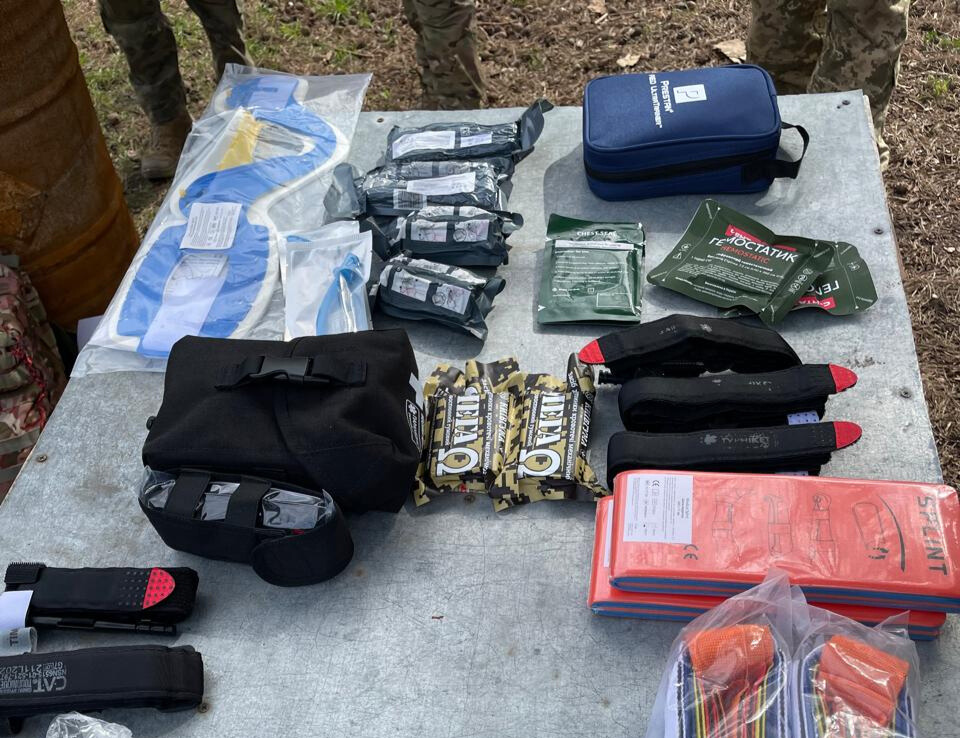
M — Massive Hemorrhage
This is the #1 killer on the battlefield. You have between 2 to 5 minutes to stop critical bleeding from a limb.
- Must-have: A high-quality certified tourniquet (CAT Gen 7, SOFT-T, or the Ukrainian “SICH”).
- Crucial: Forget about cheap fakes from marketplaces or makeshift rubber bands. They tear or fail in cold weather. Your life is worth more than a few saved dollars.
A — Airway
If a person is unconscious, their tongue can relax and block the airway.
- Must-have: A Nasopharyngeal Airway (NPA) with lubricant. It keeps the airway open for breathing.
R — Respiration
A chest wound can lead to a pneumothorax (collapsed lung) when air puts pressure on the lungs.
- Must-have: Occlusive Dressing (Chest Seal). Preferably vented, and always in a pack of two (for entry and exit wounds).
C — Circulation
Here we stop non-massive bleeding and check for shock.
- Must-have:
- Hemostatic Gauze (Combat Gauze, QuikClot) — gauze impregnated with a blood-clotting agent. Used for packing junctional wounds (neck, armpits, groin) where a tourniquet cannot be applied.
- Pressure Bandage (Israeli Bandage) — for securing wound packing or closing wounds.
H — Hypothermia / Head Injury
A wounded person loses body heat rapidly due to blood loss, even in summer. Hypothermia is deadly because it prevents blood from clotting.
- Must-have: Thermal Blanket (Survival Blanket). A lightweight foil sheet that reflects body heat.
Essentials (Tools)
- Trauma Shears: To quickly cut through clothing and expose the wound.
- Marker: To write the time of tourniquet application.
- Gloves (Nitrile): Your safety comes first.
- Duct Tape: A universal tool for securing gear or bandages.
Skills Matter More Than Gear
You can buy the most expensive $200 kit, but in a high-stress situation, you won’t remember how to deploy an Israeli bandage if your hands haven’t practiced it.
At the “National Resistance Training” course at HTEC “MIST”, you will practice the MARCH algorithm until it becomes muscle memory. We will teach you how to pack wounds and apply tourniquets to yourself and a comrade under time pressure and stress.
Don’t wait for a critical moment. Be prepared.
👉 Enroll in the course: Program for Preparing Ukrainian Citizens for National Resistance